
How to change your baby’s diaper while supporting their psychomotor development

Baby care 

Changing a diaper isn’t always instinctive or easy. When changing their baby, many parents unconsciously replicate what their grandmothers used to do—lifting the baby by the feet to raise their bottom. But this seemingly harmless gesture goes against your baby’s natural physiology. So, how can you change your baby’s diaper while supporting their psychomotor development?

Let’s talk a bit about physiology

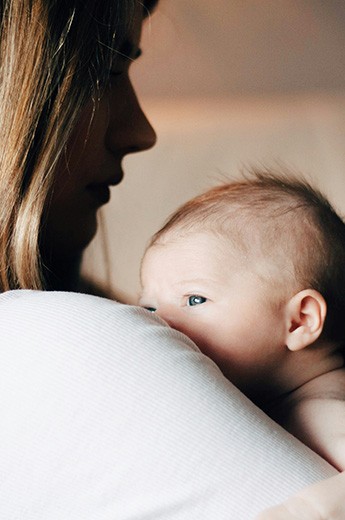
Your baby’s natural posture, even in the womb, is a curled-up position. For about nine months, they’ve lived inside your belly, curled in on themselves in that snug home.

At birth, your baby loses this natural curled posture due to the environment they now live in. Yet, it’s precisely this position that we need to maintain, as it supports their muscles, joints, and bones while providing the comfort they need. In this posture, your baby relaxes, feels soothed, and is more receptive—all of which are ideal for a peaceful diaper change, both for your baby and for you.

When we talk about “curling” here, it’s important to note that the movement should come from the pelvis. The pelvis, a large bony structure, curls to allow the lower body to move closer to the upper body. It’s the bridge that connects the top and bottom halves of the body.

Here’s a little tip to check if you’re curling your baby’s pelvis properly: their back should remain in contact with the changing mat—unlike with the classic method—and you should be able to easily slip your hand under their bottom.

Diaper changing is a gesture you’ll repeat many times a day, for several years. So why not make it a quality moment, one of connection and relaxation with your baby? And most importantly, let’s make our babies active participants in the process, in a way that respects both their physiology and their intimacy.

Why use a physiological method instead of the one our grandmothers used?

By changing your baby while keeping them curled up, you help protect their still-immature spine. Unlike adults, babies don’t yet have the three natural spinal curves. Their spine is in full kyphosis—a C-shape. By curling them up, you preserve this natural curve and avoid creating tension in the back muscles.

This approach also supports your baby’s basic sense of security. As we’ve seen, the pelvis is a major structural area of the body. It’s what gives us a sense of grounding and support. So don’t hesitate to curl the pelvis—it will help your baby build a foundation of safety, which is essential for motor development and discovery.

Encouraging this curled posture also helps reduce hyperextension in your baby’s body and may prevent worsening of gastroesophageal reflux if your baby is prone to it.

And finally, this kind of diaper change supports your baby’s sensory-motor development. It introduces them to the first side-to-side rocking motion, which is essential on the playmat as they learn to roll to their side and eventually flip over in harmony.

In practice: how to change your baby respectfully?

Start by explaining to your baby what’s about to happen. Don’t forget this is a great moment to exchange looks, smiles, and words.

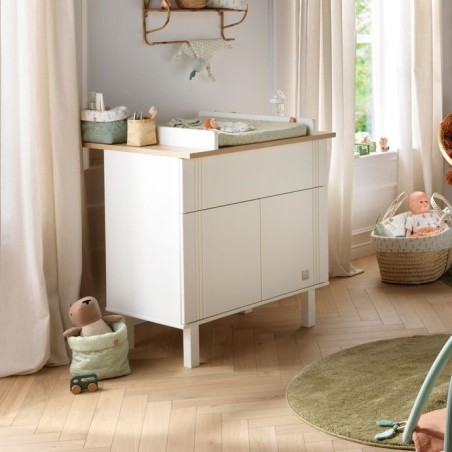
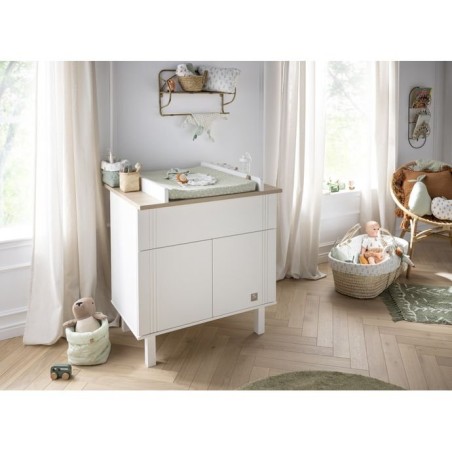
Lay your baby on their back, gently supporting their head and bottom as you place them down. The Sauthon changing table is also designed to respect your posture, being set at the ideal height. A comfortable adult is more present and attuned to their baby.

Undress your baby gently. Then place their hands on their thighs and bring their legs up in a flexed position toward their belly. This makes it easy to gently roll them to one side. Do this smoothly so they can feel the movement in their body. You can then clean their bottom easily and place a clean diaper. Roll your baby to the other side to adjust the diaper placement. Finally, return them to their back to close the diaper and get them dressed again.

To pick them up, place one hand under their head and the other under their bottom. They’ll feel secure and remain in a curled-up posture.

As your baby grows and becomes more familiar with the side-to-side rocking motion, they’ll gradually take part in the diaper change more actively.

By repeating this simple gesture daily (up to 6 times a day!), you’re offering your child countless opportunities to explore their body and how it works. You’re supporting their psychomotor development and helping their brain build pathways by showing them the “right way.” On the playmat, they’ll be able to reproduce the movement more quickly, easily, and fluidly. That’s how you’ll one day see them curl their pelvis, grab their feet, and roll to the side.

Don’t get discouraged—this method isn’t instinctive and takes a bit of practice. But after a few diaper changes, it will become second nature—and a beautiful bonding moment with your baby.

Ready to give it a try?

This article was written in collaboration with the Eveil&Conseil team to answer common questions from parents and ensure the quality of the advice provided, so you can take care of yourself while staying attuned to your baby’s needs.

Eveil&Conseil is a collective of passionate and committed health professionals.

Find all their tips and full support on their website www.eveiletconseil.fr or on their app, available on Google Play and the App Store.

Loading...