

First sensory toys: which ones to choose and how to use them?

Baby development 

Rattles or sensory balls are essential for stimulating a baby’s development.

There are many options available, so let’s take a look at what makes an ideal toy and how to use it.

Which first sensory toy should you choose?

Your baby’s fine motor skills will develop over the months. That’s why it’s important to offer toys that are suited to their level of development.

From around the 3rd or 4th month, your baby will start to touch toys, grasp them intentionally, and manipulate them. Choose lightweight, soft, colorful, and high-contrast rattles to make handling easier and capture your child’s attention. Favor rattles or grasping balls that are easy to hold, allowing the thumb to oppose the fingers.

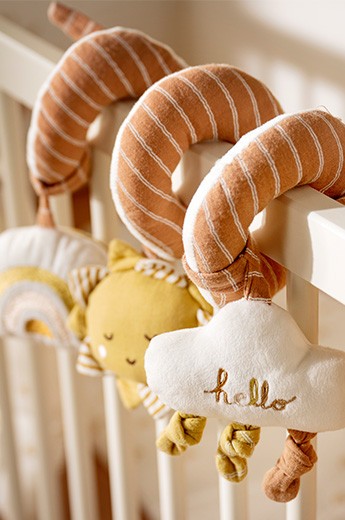
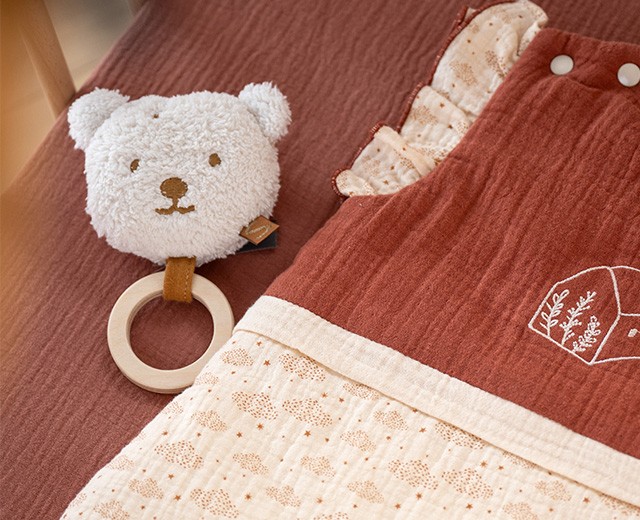
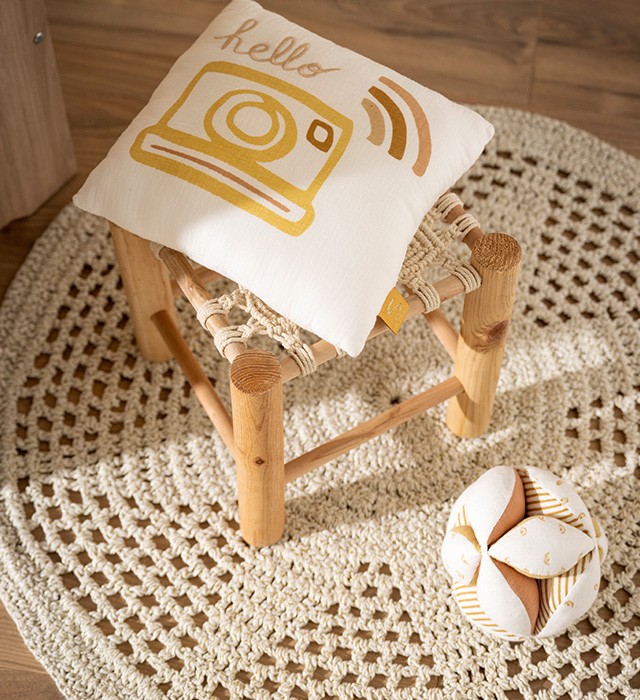
The Montessori-style sensory ball (or grasping ball) is particularly well-suited. Its padded segments make it easy for your baby to grab and handle it. Similarly, a rattle with a ring allows for easy grip.

Around 7–8 months, when the thumb-index pincer grip is developed, fine motor skills become more precise. At this stage, it’s interesting to introduce more varied and complex rattles. For example, activity cubes that encourage the baby to pull on different strings, helping to refine the pincer grip. In short, choose toys that engage and develop fine motor skills and the concept of cause and effect.

Gently stimulating the senses

Rattles and grasping balls stimulate your baby’s visual system with their bright, contrasting colors, which are especially engaging for the retina.

Rattles also stimulate hearing. The soft sounds they produce (crinkling, squeaking, jingling…) attract your baby’s attention and help coordinate sight and sound. This is called the audio-visual loop, which is particularly important in early development.

These toys also engage the tactile system through their varied textures, helping your baby’s hand adapt to different objects and learn about their qualities (soft/hard, smooth/rough…).

The rattle allows your baby to develop fine motor skills and voluntary grasp and release. They will grab it, look at it, bring it to their mouth, and then pass it to the other hand. This builds many essential coordinations, such as hand-eye coordination and bilateral coordination.

How to play with it?

There’s no need to surround your baby with tons of toys—you risk overstimulating their senses and losing their attention. Two or three are plenty. It’s better to rotate them regularly based on your child’s skills and interests.

So what can you do with them? Here are a few ideas:

For very young babies, hold the rattle about 30 cm above their face and slowly move it from side to side so they can follow it with their eyes and coordinate head and eye movement.

You can also make the rattle sound near one ear and wait for your baby to turn toward the sound. Don’t hesitate to praise them!

To encourage exploration of the right and left sides, place a rattle just above your baby’s head, slightly diagonal. Your baby will follow it with their eyes and may twist their torso—maybe even roll onto their tummy.

Before your baby knows how to crawl, there’s no point placing the rattle out of reach. But to encourage reaching and stretching, place the rattle at the edge of their grasping range—approximately at arm’s length. This way, your baby will stretch their arm and side to try and grab it.

It’s often overlooked, but you can also play with your baby’s feet—especially when they start lifting them by curling their pelvis. They’ll enjoy kicking the rattle with their feet, which promotes hand-foot coordination.

When and how long during the day?

You can offer these play sessions when your baby is calmly awake and available.

Trust your baby and observe for signs of tiredness or disinterest. It should always remain a pleasant moment for them.

This article was written in collaboration with the Eveil&Conseil team to answer many common questions from parents and to ensure high-quality advice to support you and meet your baby’s needs.

Eveil&Conseil is a collective of passionate and committed health professionals.

Find all their advice and full support on their website www.eveiletconseil.fr or on their app, available on Google Play and the App Store.

Loading...